First Pour.
A media partnership was struck this week that might not have made your inbox—but I think it’s worth calling out here.
Tubi is launching an incubator with TikTok to help creators develop original streaming content.
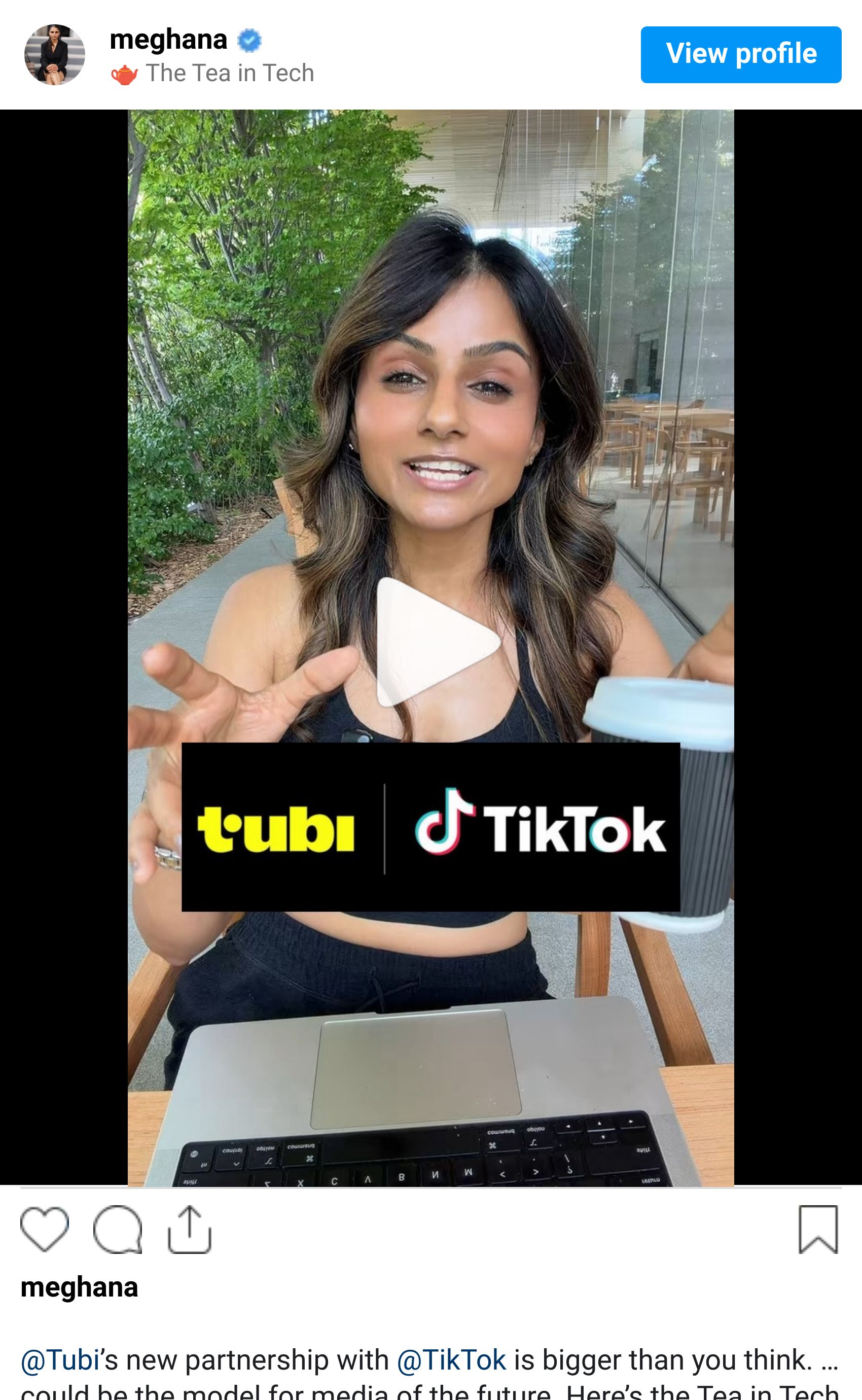
To me, this deal says a lot about where media is headed—and why distribution (and audiences) might be leapfrogging traditional channels.
For decades, Hollywood / the networks controlled distribution. If you wanted an audience, you had to go through the studios. Now, the model is breaking.
With institutional trust at an all-time low, audiences are choosing people over programming. Distribution is fragmented, mobile, and increasingly, owned by creators themselves.
Even LinkedIn is leaning into it—I shared last week that I’m partnering with them as one of a small group of creators partnering on original content for the platform
So instead of trying to manufacture the next hit, platforms are going straight to the source. Partner with the creator, lock in the audience that comes with them.
It’s a fundamentally different model. And if it works, it raises a bigger question: where exactly does mainstream media fit in, anyways?
Something to sip on. ☕️
Today’s Tech Menu:
1. OpenAI shuts down Sora, loses $1B Disney deal
My Tea: Sora was a flashy launch-turned-AI slop machine. A copyright, liability, and monetization nightmare waiting to happen.
2. Meta and YouTube held liable for harming young people through their algorithms
My Tea: The $6M fine is little more than a slap on the wrist, but the ruling could set a precedent for greater platform accountability.
3. OpenAI’s ad business just hit $100M+, six weeks after launch
My Tea: Another sign that AI chatbots are starting to follow the social media playbook: first engagement, then monetization.
4. Venture funding is tightening, but AI infra is still hot
My Tea: The next great consumer AI companies are likely getting built in stealth while investors keep chasing picks-and-shovels.
5. NVIDIA says demand for its AI systems could top $1T by 2027
My Tea: Convenient prediction coming from NVIDIA, but they might not be wrong.
The Steep.
OpenAI’s ad business is officially a hit. This week, it reached a $100M run rate—just six weeks after launch.
I wanted to pause on this, because ads signal a lot more than a pre-IPO revenue flex. They’re a reflection of the product direction and roadmap—ultimately, what a company optimizes for, and what it values.
And this feels very familiar.
It’s the exact playbook we used in social: build engagement first, then layer monetization on top. It worked incredibly well. But it also created very real—and often misaligned—incentives.
At Instagram, we optimized relentlessly for time spent, clicks, and tighter engagement loops. Over time, those loops didn’t just become effective—they became addictive. Sometimes even toxic.
Now look at AI.
These are already some of the most engaging interfaces we’ve ever seen. You ask a question, you get an answer. You follow up, it responds. The loop is fast, personal, and continuous.
And now monetization is entering the picture. Which brings us to incentives.
This week, a $6M judgment against Meta and YouTube put renewed attention on a question that’s been simmering for years: how responsible are platforms for the content they distribute?
That debate has historically fallen under Section 230, which shields platforms from liability for user-generated content. But AI blurs that line; the platform is also generating the content.
What happens when that content is optimized to keep you hooked, to hold your attention…to monetize?
And when something goes wrong, who’s responsible? The model, the platform, the advertiser?
We don’t have clear answers yet.
But if engagement and monetization keep scaling this fast, we’re going to need them. Soon.
Final Sip.
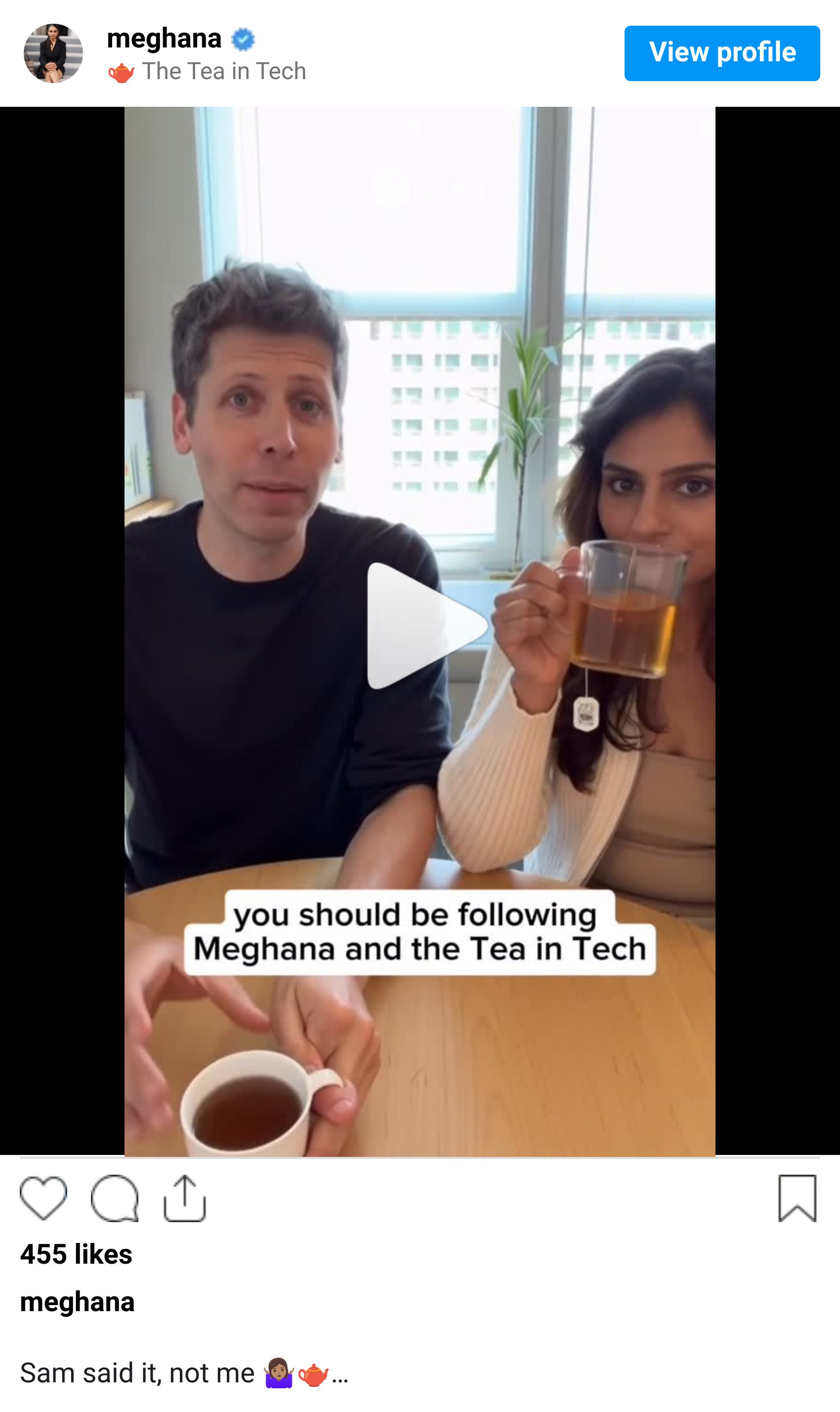
You know what, I’ll just admit it. I was a huge Sora fan. RIP to a real one. See below, my most treasured Sora creation.
Same time, same place next week? Bring a brew.
Meghana